Day 4: Who Gets to Decide What “Sustainable” Means
Nyaniso Tutu-Burris
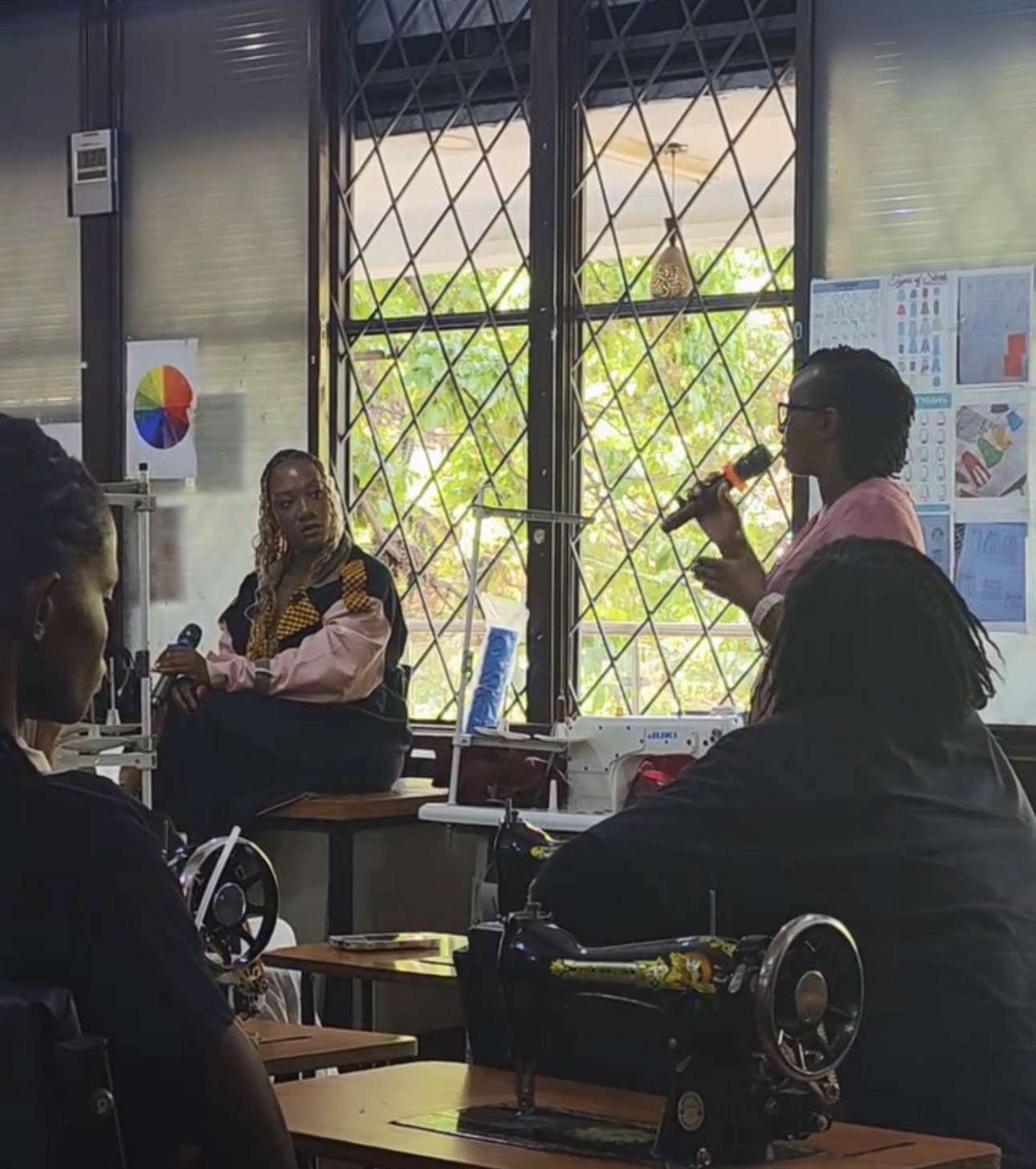
I went to speak to students at Delight Fashion School in Nairobi.
And it was harder than I expected.
Coming from South Africa, and especially from Cape Town, I often forget that it’s not a full representation of Africa. We are deeply embedded in the global sustainability conversation: we have the language, we have the frameworks, we have the exposure.
But that’s not the whole continent.
When I started speaking about the EU’s Digital Product Passport (DPP) (the tracking and tracing requirements being rolled out next year) I watched faces fall.
Not because they don’t care.
But because it felt like this: here is another thing.
Another form. Another system. Another compliance structure. Another gate.
And when you are worried about having enough water to wash your fabrics…
When you are struggling to access materials in the first place…
When you are building with what you can find…
“Ethically sourced” and “digitally traceable” can feel like luxury conversations.
This is the problem with how sustainability has been framed; it sounds noble… but structurally, it excludes.
Africa Is Already Sustainable
The part that frustrates me is that African brands are inherently sustainable.
Not because it’s trendy, but because we cannot afford excess.
You reuse water, you work with upcycled materials because buying new stock isn’t always possible. You preserve traditional fabrics because cultural continuity matters. You produce in small batches because you don’t have capital for overproduction. You work inside your community because that’s how ecosystems survive here.
That should count.

But the way the global sustainability conversation is structured, it doesn’t. Because now sustainability is paperwork.
Now sustainability is proof.
Now sustainability is compliance.
And compliance becomes another tool to say, “You are not doing enough. You do not meet the standard. You do not get access.“
The Policy Paradox
One of the brand owners asked me something that I haven’t stopped thinking about, “Who gets to decide these policies?”
Because the same regions creating sustainability requirements are often the ones exporting their waste to this continent.
They regulate production.
But when garments are discarded?
They are shipped back here.
Landfilled here.
Burned here.
Out of sight. Out of mind.
And yet African brands must now prove themselves to enter markets that have historically extracted from them.
That tension is real.
And sitting in front of those students, I felt it.
I didn’t want to be the bearer of bad news.
I didn’t want to say, “here’s another system you must adapt to in order to belong.”
Because the truth is: we are not late to sustainability. We are early. We have been doing it out of necessity, not strategy.
Two Sides of the Same Coin
The Digital Product Passport is about verification.
In theory, it measures sustainability.
In practice, it can become a barrier.
OneThread, what we’re building, is also about measurement.
But the intention is different.
Not: “You are not good enough.”
But: “You’ve been doing the work. Let’s help you prove it.”
There’s a difference between policing sustainability and revealing it.

The brands here don’t need to be taught how to sustain.
They need language, structure, and translation. Because if they don’t comply, they risk being excluded from markets.
But if they do comply (and position themselves correctly) they are not just participants in this conversation, they are leaders.
I walked into that talk prepared, and then I got flustered. Because I care, I honestly had to shift myself to stop from crying because respectfully: what the f? I don’t want to be the one carrying news that feels like another Western barrier. I don’t want to be the messenger of another system that feels like it was designed somewhere else and delivered here as law.
But maybe the real work isn’t delivering bad news.
Maybe it’s reclaiming the frame.
Ubuntu teaches us: I am because you are.
Not: I am because I extracted more than you.
Not: I am because I complied better than you.
Our economies have always been relational.Our production has always been communal.
Our sustainability has always been embedded in survival.
That is not backward.
That is not underdeveloped.
That is not late.
That is sovereignty.
Sustainability cannot mean that someone else defines the standard and we scramble to catch up.
It must also mean the right to define our own story.

The right to say:
We have been doing this.
We have been sustaining.
We have been innovating; even when we didn’t call it that.
Compliance may be required.
But narrative sovereignty is not optional.
And if Ubuntu is the foundation, if we truly believe that our humanity is tied to one another, then sustainability cannot be a gate.
It has to be a bridge.