Fashion Is Worth Protecting Because We Are
Nyaniso Tutu-Burris
Creative season is starting again, which means I am about to become deeply annoying about clothes.
I spend so much of my time now talking about sustainability assessments, evidence, traceability, compliance, Digital Product Passports and blockchain verification that sometimes I realise I do not talk very much about fashion itself anymore. Which is funny, because fashion is the reason I care about any of this.
I love clothes because I have always understood them as communication. Long before I had language for fashion theory or cultural sustainability, I understood that what someone wears can tell you something about how they see themselves, how they want to be seen and sometimes even what they are going through. I grew up watching How Do I Look? and What Not to Wear, fascinated by the transformation that could happen when somebody finally saw themselves differently. I still love seeing someone wear something I would never choose for myself and thinking, I love that for you (not in the shady way, swear). Personal style does not have to make sense on my body for me to recognise when somebody else has found themselves in theirs.
I think I learned to read clothes from the women in my family.
Shopping with my mother was never just shopping. We would pick something up and immediately start telling a story about it. If we hated a dress, it wasn’t enough to say it was ugly. It was, “It’s giving you were getting married to the cult leader at noon but need to be on time for cage diving at 2” (yes, this was about a particular dress), and suddenly we had invented an entire person and occasion around it.
We would sit by restaurant windows and make stories about the people walking past from what they were wearing. I still instinctively choose the seat facing the window. I’m here right now looking at a woman with an outfit that gives soccer mom but a haircut that’s giving punk rock star. Love it for her.
When my mother travelled, she would call because she had seen “my wedding dress” somewhere, or the boots I needed to wear with it. I remember a night the power went out, and my aunt emerged from her room in PJs and matching slippers, with a little heel, because apparently even bedtime requires attention to detail. As a teenager, I used to study one of my older cousins’ social media before family events because I admired her and the way she dressed so much. I wanted to find something she would think was cool.
Fashion has always been part of how my family communicates.
When I later started styling people, I was less interested in what was fashionable than in transitions: Who are they now? What does that version of them wear? I loved watching someone put on a piece they were afraid of and suddenly recognise themselves in it.
Fashion Has Always Contained Data
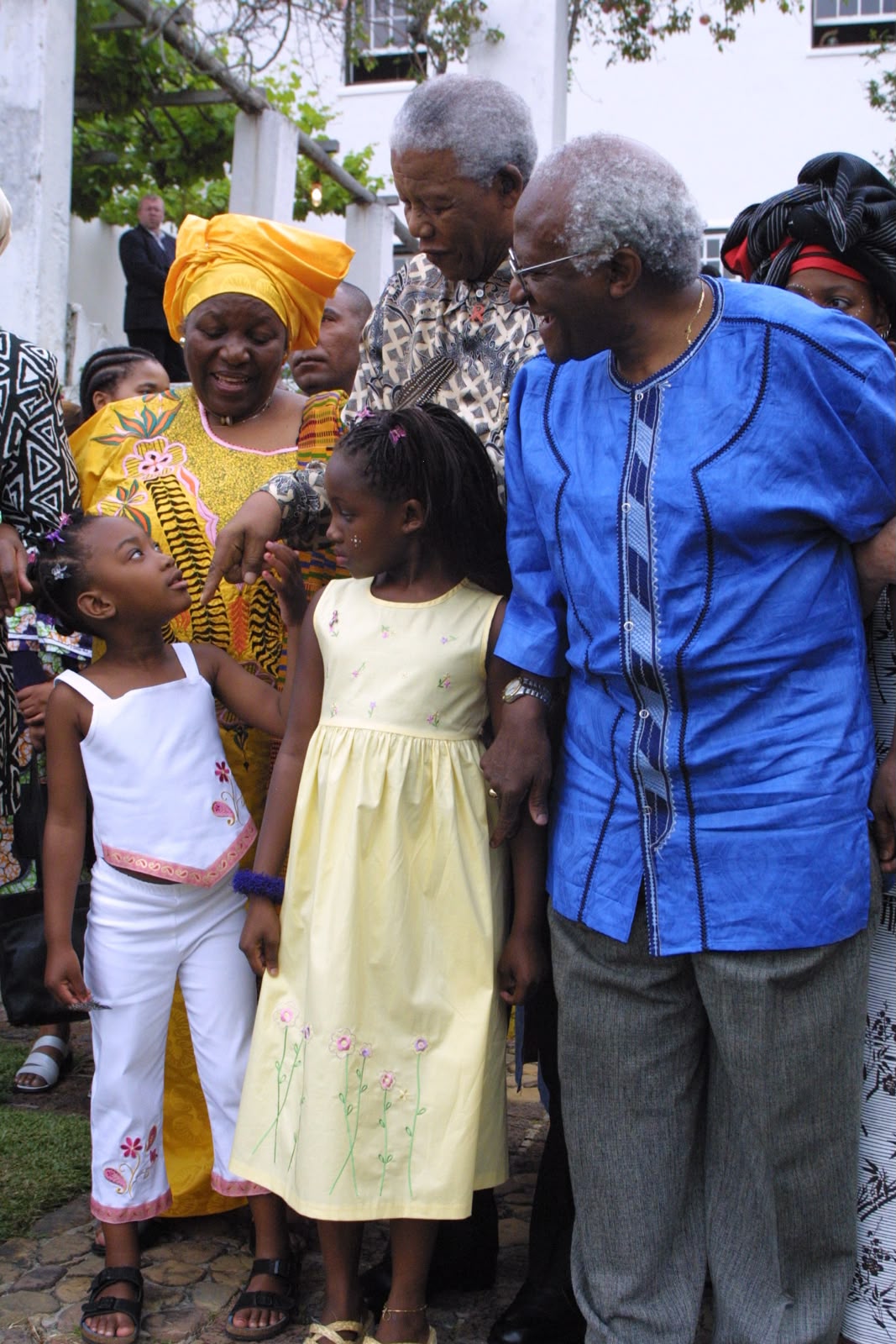
Travelling expanded that understanding because I began seeing how much more than individual identity could live inside a garment. People explained why particular colours appeared in their textiles, what was historically available to dye with, where a technique came from, or why a shape mattered. What looks like an aesthetic decision can contain geography, trade, environment, ceremony, migration and memory.
Fashion has always contained data. We just didn’t always store it in databases.
Sometimes it was stored in stories. Sometimes in hands, patterns, techniques and garments. Sometimes in grandmothers.
And sometimes, clothing became a language in its own right.
I love a story from Nigeria about women using fabric as a form of communication during British colonial rule. The story tells of Yoruba women using adire prints and patterns to communicate information between one another (messages about meetings, resistance and what was happening within their communities) while the colonial authorities around them remained largely unaware of what they were reading.
My favourite part of this story is the idea that British women could encounter, buy and wear these fabrics without understanding the conversations taking place across them. The textile could move directly through colonial spaces while carrying meaning that remained legible to the women who understood its language.
Whether it was written into the colonial archive was almost beside the point. The women knew what they were saying to each other.
I think about stories like that when we talk about what counts as information, evidence and recorded history. So much African knowledge survived because it did not depend exclusively on the systems that later decided what was worthy of being archived. Knowledge travelled orally. Through practice. Through objects, bodies and clothing.
Even what we casually call “African wax print” carries a complicated history. Wax-resist textile traditions include Indonesian batik and Dutch industrial production. Dutch manufacturers attempted to industrialise batik production during the colonial period, and fabrics that ultimately found enormous markets in West Africa were adopted, renamed and transformed through African use.
Vlisco, one of the names most associated with what many people recognise visually as African wax print, is a Dutch company. A fabric can be designed and manufactured outside Africa and arrive somewhere like the United States without ever touching African soil, while still being read immediately as “African.”
Yet African people did not passively receive these textiles. We gave patterns names and meanings. We incorporated them into ceremonies, relationships, politics, status and everyday communication. We made them part of our visual language; so strongly that the rest of the world learned to recognise that language as African even while significant parts of its production and commercial ownership could sit elsewhere.
Ownership, origin, adaptation, memory and identity can all exist inside the same piece of cloth.
On a continent where cultural objects were taken, histories destroyed, people displaced and systems of knowledge deliberately interrupted, that matters. Not every society needed knowledge to exist in a written archive for that knowledge to survive.
Oral history carried it. Practice carried it. People carried it. Clothing carried it.
So when I look at African fashion, I’m not always looking at a designer who discovered an interesting historical reference and built a collection around it.
Sometimes my ancestors are inside.
The designer may be part of the lineage they’re referencing. The technique may have travelled through generations before arriving in their hands. The archive isn’t necessarily somewhere else waiting to be discovered.
Sometimes the designer is part of the archive.
Creativity Is Not the Problem
That is partly why I love creative season here so much. I’m much more interested in discovering an emerging designer or someone straight out of fashion school than keeping up with every collection coming out of Paris or Milan. There is something that tickles my brain about seeing creatives before the market has completely determined them. They still have permission to be strange. You get to watch people think.
When I designed, I was terrible at drawing. My process often involved sending a friend a questionable sketch accompanied by a seven-minute voice note explaining what it was actually supposed to mean. Somehow she would send back exactly what I had imagined, and eventually that drawing would make its way to a seamstress. I want to be honest here. I hate sewing. I literally only learned because I needed to understand the process. But I loved watching something that had existed only in my head become physical.
That transformation is worth protecting.
Which is why I get frustrated when sustainable fashion is reduced to make less, buy less, do less. Fashion absolutely has an excess problem. We need to address waste, exploitation and overproduction. But creativity isn’t the thing I want us to optimise out.
The point isn’t simply to do less. The point is to do better.
I still want fantasy, experimentation, craft, cultural specificity and the graduate collection that would terrify a merchandising department. A sophisticated definition of sustainability should be capable of holding those things.
What I don’t want is sustainability becoming another form of gatekeeping in an industry already very good at it. If sustainability is genuinely the objective, giving more people the ability to practise it, document it and benefit from it should be part of the objective too.
Otherwise, we risk repeating an old pattern: extracting resources, labour, designs and cultural knowledge, creating enormous commercial value from them, and then building another system that tells the people they came from that they don’t meet the standard.
Show Your Work
Maybe this is why I ended up caring so much about infrastructure.
Growing up, my brain often moved faster than my hands. In school, I could know how I wanted to write something before I could produce the required mind map. In math, I could reach the answer without necessarily getting there through the neat sequence of steps I was expected to show and then I’d lose marks.
Not because the answer was wrong, because I hadn't shown my work.
Eventually I learned to work backwards. Write the thing, then reconstruct the mind map. Find the answer, then document the steps in a format the institution could recognise.
Now the world is beginning to ask fashion businesses to do the same thing.
Show where this came from. Show who made it. Show what happened to the waste. Show the consent. Show the material origin. Show the evidence behind the claim.
Except this time the penalty isn’t ten percent.
A brilliant designer who cannot show their work can lose access to funding, procurement, investment or markets. And when a business disappears, we can lose far more than a company: jobs, technical knowledge, community income, cultural knowledge and whatever that person might have created next.
That is why I care about the infrastructure.
Not because I became less interested in fashion, but because I don’t want administrative legibility to determine whose creativity gets to survive.
As technology and AI become more capable, we’re going to have to become increasingly intentional about what we refuse to optimise out of being human. Not all knowledge arrives neatly formatted. Not every creative process can be explained before it happens. Sometimes knowledge has travelled through a family or community without ever becoming a PDF.
Our systems need to become sophisticated enough to recognise that reality rather than sophisticated enough to erase it.
Because fashion is worth protecting because we are: the people who make it, wear it, carry knowledge inside it and imagine what it could become next.
For the past few months, I’ve written about what sustainable fashion contains and the infrastructure we need around it. Over the next few weeks, I want to get practical about how brands show their work: what we should record, what makes a sustainability claim provable and what that evidence can unlock.
But before we talk about how to prove the work, I wanted to remember why we’re building the systems at all.
Not to make fashion smaller, quieter or less human.
To make sure extraordinary people get to keep creating it.