Cultural Sustainability & Narrative Sovereignty: Who Gets to Tell the Story?
Nyaniso Tutu-Burris
This article is part of the OneThread Ten Pillars of Sustainability series, a framework developed to challenge narrow definitions of sustainability and explore what sustainability looks like when viewed through an African lens.
This week, as South Africa marked 50 years of commemorating Youth Day, I found myself thinking about stories.
Not just the stories we tell about ourselves, but the stories we inherit. The stories that shape how we see the world. The stories hidden in our clothing, our languages, our traditions, our families, and our communities.
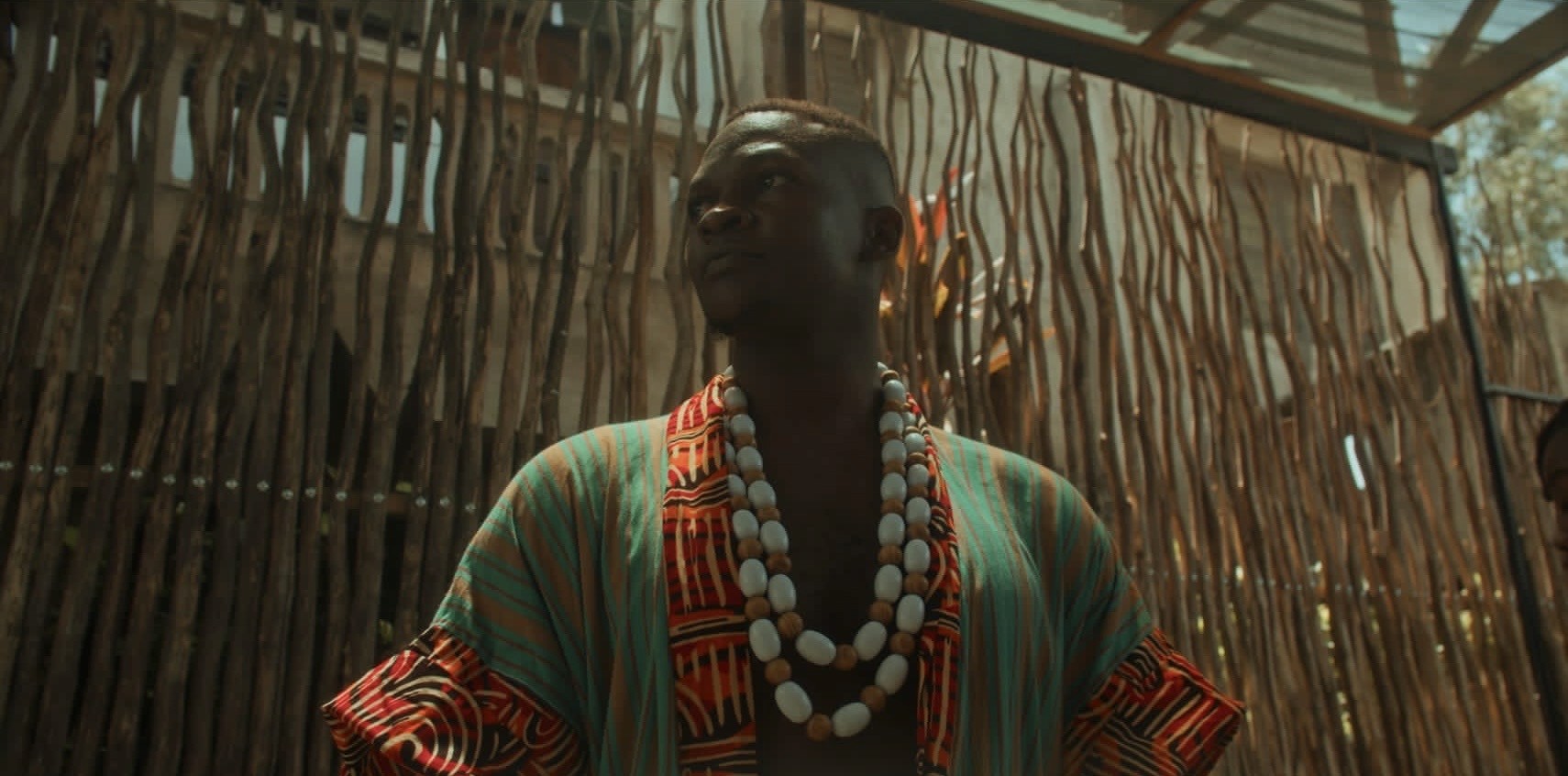
A few weeks ago, we released the OneThread documentary. One of the things we speak about in the film is that every garment carries a story. Not metaphorically. Literally.
A piece of cloth tells you where it came from. Who made it. What techniques were used. What traditions informed it. What community preserved that knowledge long enough for it to exist today.
The threads hold a story.
The problem is that we’re living in a world where the product often survives longer than the story does.
A pattern survives.
The people who created it disappear.
A technique survives.
The community that preserved it is forgotten.
A cultural symbol survives.
The meaning behind it gets stripped away.
And I think that’s one of the biggest sustainability challenges nobody talks about.
Because a community doesn’t disappear only when its forests are destroyed or its rivers run dry.
Sometimes a community disappears when nobody remembers its stories anymore.
Sometimes it disappears when a language dies.
Sometimes it disappears when a craft is no longer practiced.
Sometimes it disappears when the world loves the aesthetic but forgets the people.
That’s why cultural sustainability matters.
And that’s why narrative sovereignty matters.
Because before we can ask what we’re preserving, we have to ask a more uncomfortable question:
Who gets to tell the story?
When Culture Becomes Aesthetic We live in a strange moment in history.
African culture has never been more visible.
You can find Ankara prints in London. Maasai-inspired collections in Milan. African-inspired interiors in New York. Traditional motifs reproduced by brands on the other side of the world.
And yet, at the same time, I’ve sat in markets across East Africa listening to young people explain why they don’t wear traditional clothing anymore.
Somehow our culture became globally desirable at the exact same moment many of us started questioning its value.
Cultural exchange has always been part of human history. Ideas travel. Influences blend. New forms of creativity emerge. The problem is not that culture travels, the problem is what happens when culture travels without context.
Culture is more than what something looks like; culture is the story behind the object. It is the memory embedded within it, the accumulated knowledge of generations. Culture is the meaning that gives an object its significance.
When the story disappears but the aesthetic remains, something important is lost.
A fabric is just a print.
A tradition is just a trend.
A community is just a mood board.
Culture is just a commodity.
The Cost of Cultural Extraction
Fashion has always been borrowed from culture. The question is not whether borrowing happens. The question is whether the people who created something remain connected to its value.
Too often, they do not.
Many of the techniques, materials, and cultural expressions that inspire global fashion today originate in communities that receive little recognition or benefit from their contribution. Traditional craftsmanship is replicated. Indigenous knowledge is commercialized. Heritage designs are reproduced. Yet the communities responsible for preserving those traditions are rarely credited, rarely consulted, and rarely compensated.
This creates a strange contradiction.
The world celebrates African creativity while many of the artisans responsible for that creativity struggle to sustain their practices. The world profits from cultural heritage while the people protecting that heritage often receive little of the value it generates.
What is being extracted is not only a product, but knowledge, decades of memory.
It is identity.
And unlike physical resources, cultural resources become increasingly vulnerable the more disconnected they become from the people who created them.
Losing Confidence in Ourselves
During our visit to the Mitumba market Mombasa, we spent time speaking with traders and designers about traditional fashion and cultural dress. One question kept coming up: why were there so few stores selling traditional garments and fabrics compared to imported alternatives?
Many people associated Western fashion with success and traditional clothing with lack. Wearing imported brands was often perceived as aspirational. Wearing traditional garments was sometimes seen as old-fashioned or less prestigious.
The issue was not that traditional craftsmanship lacked value. In many cases, the quality, skill, and artistry embedded in those garments far exceeded what could be found in mass-produced fashion.
The issue was perception.
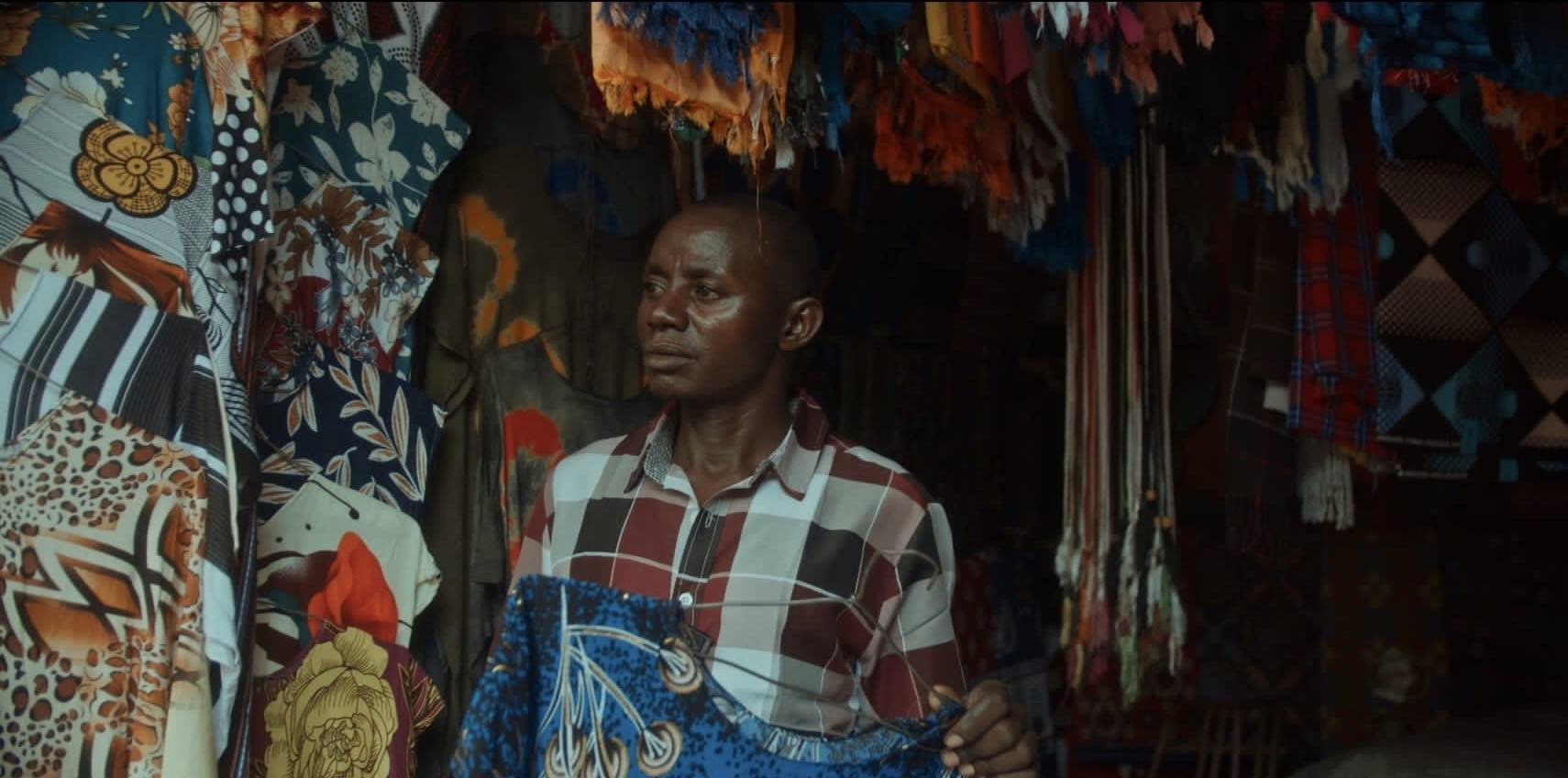
For generations, value has often been defined elsewhere. We have been taught to see certain forms of knowledge, creativity, and craftsmanship as modern and desirable, while viewing others as outdated or less important.
One of the most powerful examples of resistance to this can be seen in brands that intentionally bridge heritage and contemporary design. Rather than treating tradition and modernity as opposites, they demonstrate that cultural identity can evolve without disappearing.
Because cultural sustainability is not about freezing culture in time.
It is about ensuring that culture remains alive.
Narrative Sovereignty Is About Power
At its heart, narrative sovereignty is not simply about storytelling but power.
History is often written by those who win. The stories that survive are often the stories that were documented, published, funded, and amplified. As a result, entire communities can find themselves represented through narratives they did not create.
This is particularly true across Africa.
For centuries, African stories have been interpreted, translated, documented, and distributed by external voices. Sometimes with good intentions. Sometimes without them. But whenever someone else controls the narrative, they also influence how value is assigned.

Narrative sovereignty is the right of communities to define themselves rather than be defined by others. It is the right to tell their own stories, preserve their own complexity, and shape how their histories and futures are understood.
Because stories are not neutral.
Stories influence investment.
Stories influence policy.
Stories influence culture.
Stories influence identity.
Stories influence who benefits.
When communities lose ownership of their narratives, they often lose ownership of their value as well.
Consent, Credit, and Compensation
One of the most practical dimensions of cultural sustainability concerns consent, credit, and compensation.
Who gave permission?
Who received recognition?
Who benefited economically?
Who owns the intellectual property?
These questions are becoming increasingly important as industries look toward indigenous knowledge, heritage crafts, traditional materials, and community expertise as sources of innovation.
This is why frameworks such as bioprospecting and benefit-sharing agreements matter. They recognize that traditional knowledge is not simply a free resource waiting to be extracted. It is knowledge that has been developed, protected, and transmitted across generations.
The people who hold that knowledge are not obstacles to innovation.
They are contributors to it.

True sustainability requires that they are consulted. It requires that they are credited. And where value is created, it requires that they are compensated.
Because sustainability without fairness is simply another form of extraction.
Storytelling Is Infrastructure
When we think about infrastructure, we tend to think about roads, factories, technology, and supply chains. Rarely do we think about stories.
Yet stories are one of humanity’s oldest forms of infrastructure.
Long before knowledge was stored in databases, it was stored in people. Oral histories preserved ecological knowledge, governance systems, agricultural practices, cultural values, and collective memory. Stories became the mechanism through which knowledge survived.
This is one of the reasons cultural sustainability matters so deeply.
Many of the practices now being presented as sustainability innovations have existed in communities around the world for generations. Repair culture. Circular systems. Community stewardship. Shared economies. Regenerative practices.
What we often call innovation is sometimes remembrance.
The future of sustainability may depend as much on what we remember as what we invent.
Because memory itself is a sustainability asset.
From Preservation to Proof
One of the challenges with cultural sustainability is that, unlike environmental impact or labour practices, culture is often treated as intangible.
We know it matters.
We know it has value.
We know it should be protected.
But historically, there have been very few systems for documenting, governing, and preserving cultural contributions in ways that can be consistently tracked over time.
This is where cultural sustainability moves beyond philosophy and into practice.
The good news is that we’re finally starting to recognize something that indigenous communities have known for centuries: knowledge has value.
Not just economic value.
Cultural value.
Historical value.
Community value.
And if we’re willing to protect intellectual property for software, music, pharmaceuticals, and luxury brands, then surely we should be willing to protect the knowledge systems that have been passed down through generations.
We’re already seeing this shift happen. Ghana’s work around authentic Kente cloth is one example. Bioprospecting and benefit-sharing regulations are another. Slowly, we’re beginning to acknowledge that traditional knowledge is not a free resource waiting to be extracted.
It belongs to people.
It belongs to communities.
And if those communities are creating value, then they deserve more than a footnote at the bottom of a report.
They deserve recognition.
They deserve participation.
And they deserve to share in the value that their knowledge creates.

These developments reflect an important shift: culture is no longer being viewed solely as heritage. It is increasingly being recognized as intellectual, social, and economic value.
At OneThread, we believe that cultural sustainability requires the same thing as every other pillar of sustainability: visibility. If cultural contributions cannot be documented, they become difficult to protect. If traditional knowledge cannot be traced, it becomes easy to extract. If communities cannot demonstrate their role in creating value, they are often excluded from the benefits that value generates.
This is why our approach focuses on creating the infrastructure necessary to document cultural participation, attribution, consent, and benefit-sharing.
Through tools such as Cultural Source Registers, Prior Informed Consent logs, Cultural Attribution records, Oral History archives, and Community Governance documentation, we help brands create evidence of cultural stewardship rather than relying solely on good intentions.
These systems do not replace culture.
They do not own culture.
And they do not attempt to reduce culture to a checklist.
Their purpose is much simpler.
They create records.
They preserve memory.
They provide evidence that communities were consulted, that knowledge holders were recognized, that permissions were granted, and that benefits were shared.
Because cultural sustainability cannot depend solely on trust.
Just as environmental claims require evidence and labour claims require documentation, cultural claims also deserve accountability.
The future of cultural sustainability will belong to the communities, brands, and institutions that are able to demonstrate not only what they created, but how they preserved, protected, and respected the people and histories behind it.
Preservation is important.
But preservation without documentation remains vulnerable.
And in a world increasingly driven by data, proving cultural stewardship may become just as important as practicing it.
Preserving Culture Is Preserving the Future
Sustainability is often framed as a responsibility to future generations. We talk about leaving behind cleaner environments, stronger economies, and healthier systems.
But future generations need more than resources.
Maybe that’s why I struggle with the idea that culture is somehow separate from sustainability.
If sustainability is about making sure something survives for future generations, then surely culture belongs in that conversation.
Because future generations need more than clean water and renewable energy.
They need to know who they are.
They need to know where they come from.
They need to know the stories that shaped them.
And if we lose those stories, if we allow them to be extracted, commodified, forgotten, or overwritten, we lose something that no amount of technology can replace.
We lose memory.
We lose identity.
We lose part of ourselves.
Which is why preserving culture isn’t really about protecting the past.
It’s about making sure the future still knows where it came from.