Innovation & Design Thinking: The Myth of Novelty
Nyaniso Tutu-Burris
This article is part of the OneThread Ten Pillars of Sustainability series, a framework developed to challenge narrow definitions of sustainability and explore what sustainability looks like when viewed through an African lens.
When most people hear the word innovation, they imagine something new. A breakthrough technology. A revolutionary invention. A product that changes everything overnight. We have become so accustomed to associating innovation with disruption that we rarely stop to ask whether disruption is actually the point.
The longer I have worked in sustainability, fashion, and entrepreneurship, the more I have come to believe that we misunderstand innovation. We talk about it as though its purpose is to create the future. But more often than not, innovation is simply about solving the problem in front of you.
That distinction matters.
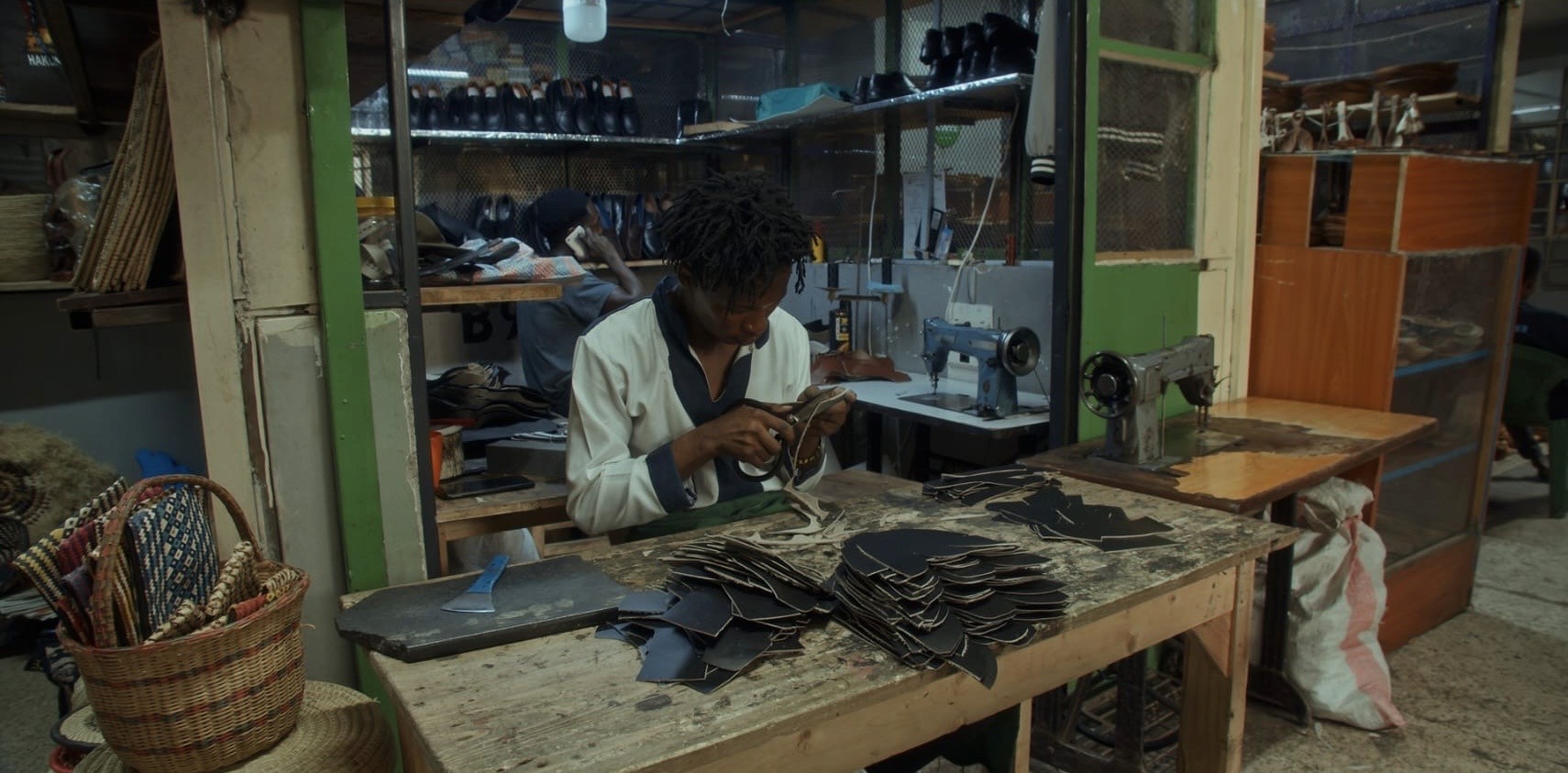
Because when we look at innovation through an African lens, it often looks very different from the stories we are used to hearing. It is less concerned with novelty and more concerned with usefulness. Less focused on reinvention and more focused on adaptation. Less about creating something that has never existed before and more about finding ways for people, communities, and systems to thrive within the realities they face.
Perhaps that is why I believe sustainability is not just about materials. It is about mindset. It is about how we think, how we solve problems, and whether we are willing to design for the world as it actually exists rather than the world we imagine it should be.
Ingenuity Born From Constraint
One of the things I love most about this continent is that innovation often emerges from constraint.
Not because constraint is desirable. Not because lack is something to romanticize. But because human beings are remarkably creative when they have to be.
Across Africa, we have spent generations solving problems with limited resources, inconsistent infrastructure, and systems that were often never designed with us in mind. The result is a kind of ingenuity that is deeply practical. It does not always happen in research laboratories. It does not always come with venture capital backing. It does not always receive international recognition.
Sometimes it looks like a mechanic keeping a machine running long after it was expected to fail. Sometimes it looks like a market trader finding ways to preserve products without refrigeration. Sometimes it looks like a designer transforming offcuts and production waste into entirely new garments because wasting fabric simply isn’t an option.
These solutions may not always appear in innovation case studies, but they are innovations nonetheless.
Because innovation is not defined by how complicated something is. It is defined by whether it solves a problem.
And that is something Africa has been doing for a very long time.
Technology Is A Tool, Not An Identity
One of the challenges with modern conversations about innovation is that we often confuse innovation with technology.
Technology can absolutely be innovative. But innovation and technology are not the same thing.
A community governance model can be innovative.
A repair system can be innovative.
A cooperative business structure can be innovative.
A traditional agricultural practice adapted to modern conditions can be innovative.
Technology is simply one of many tools available to us.
Yet increasingly, we speak as though innovation begins and ends with technology itself. We become fascinated by the tool while forgetting to ask what it is supposed to achieve.
Artificial intelligence is a perfect example.
The most important question about AI is not what it can do. The most important question is what problem it is solving.
Can it reduce waste?
Can it improve decision-making?
Can it increase access?
Can it strengthen traceability?
Can it help businesses operate more efficiently?
Technology without purpose is novelty.
Technology applied to a meaningful challenge becomes innovation.
The difference is not the tool.
The difference is the intention behind it.
Designing For Reality
One of the most important lessons sustainability has taught me is that context matters.
A solution that works perfectly in one environment may fail completely in another. A garment designed for a Scandinavian winter is solving a different problem than a garment designed for a Kenyan summer. A circular system developed in a city with advanced recycling infrastructure is solving a different challenge than a circular system operating in a community where repair culture already exists.
The same is true of income. The same is true of mobility. The same is true of accessibility.
Too often sustainability is presented as though there is one ideal model and the rest of the world simply needs to catch up.
But designing for reality means recognizing that people live different realities.
The question is not whether a solution is sustainable somewhere.
The question is whether it is sustainable here.
Can people afford it?
Can they access it?
Can they maintain it?
Can it survive the conditions it is being designed for?
Because a solution that works perfectly on paper but fails in practice is not innovative.
It is incomplete.
The Problem With Copy-and-Paste Innovation
I remember speaking with fashion students in Kenya about fabric preparation. In many fashion schools, washing fabric before production is considered standard practice. The reasoning is straightforward. Washing helps remove excess dye, allows for shrinkage, and improves quality control before production begins.
To me, it seemed like an obvious step.
Then one of the students asked a question that completely shifted my perspective.
“Why would we wash the fabric?”
For them, water was not an abundant resource. The water used in production was often the same water needed in homes and communities. What I had assumed was a universal best practice suddenly became something far more contextual.
In that moment I realized that sustainability cannot simply be imported.
A framework developed in Europe may not automatically work in Nairobi. A process designed in Amsterdam may not make sense in Accra. A solution built for one reality may become a burden in another.
The challenge wasn’t innovation.
The challenge was context.
The most sustainable solution is not always the most advanced one.
More often, it is the solution that understands the environment in which it operates.
Innovation Doesn’t Always Look Revolutionary
One of the biggest misconceptions about innovation is that it has to be revolutionary.
We imagine dramatic breakthroughs. We imagine technologies that change entire industries overnight. We imagine people standing on stages announcing that everything is about to be different.
But most innovation is much quieter than that.
OneThread itself is a good example.
We didn’t originally set out to build sustainability infrastructure. We certainly didn’t set out to help brands prepare for Digital Product Passports.
We wanted to build a marketplace for sustainable African fashion.
The challenge came when we asked a seemingly simple question.
How do we know it’s sustainable?
At first the answer seemed obvious.
We verify it.
But then another question emerged.
Verified by whom?
And according to whose definition?
The deeper we looked, the more we realized that the problem wasn’t a lack of sustainability. African brands were already doing remarkable work. They were sourcing locally, supporting artisan communities, repairing rather than replacing, producing in smaller quantities, and building businesses around relationships rather than extraction.
The challenge was that very few of the systems used to measure sustainability had been built with African realities in mind.
That realization fundamentally changed the direction of OneThread.
We stopped asking how to create a sustainability marketplace and started asking how to create sustainability infrastructure.
The innovation wasn’t sustainability itself.
The innovation wasn’t verification itself.
The innovation was adaptation.
It was taking concepts that already existed and reimagining them for a context that had largely been overlooked.
Because innovation does not always mean starting from scratch.
Sometimes innovation means starting where people are.
Small Shifts, Big Impact
I often think about traditional fabric stamping.
Historically, artisans carved stamps from wood and used them to create patterns by hand. The process was beautiful, skilled, and culturally significant. It worked.
Today, some artisans use foam instead.
The patterns remain the same. The stories remain the same. The cultural significance remains the same.
What changes is the efficiency.
Foam is easier to carve. Easier to replace. Faster to work with.
The innovation wasn’t changing the tradition.
The innovation was making the process work better.
And I think this is where we often get innovation wrong.
We have convinced ourselves that innovation has to be a giant leap forward. That if something doesn’t completely reinvent a system, it cannot be innovative.
But some of the most important innovations are small.
A process becomes faster.
A material becomes more accessible.
A tool becomes easier to use.
A system becomes more efficient.
Innovation is not always about replacing what came before.
Sometimes it is about helping what already works survive.
Why Africa Is Built For Leapfrogging
One of Africa’s greatest advantages is that we are not always burdened by legacy systems.
Progress does not always happen in a straight line. Some of the most transformative innovations occur when entire stages of development are skipped altogether.
We saw this with mobile money. We saw it with telecommunications. We are increasingly seeing it with renewable energy.
I believe sustainability will follow a similar path.
The future of sustainable fashion on this continent may not look like a slower version of what happened elsewhere. It may look entirely different.
We have the opportunity to build traceability systems without decades of paperwork. We can create verification systems that are mobile-first. We can develop circular economies that build on repair cultures that already exist. We can design infrastructure around today’s realities rather than yesterday’s assumptions.
In many ways, Africa’s greatest innovation advantage is not that we have fewer challenges.
It is that we have fewer assumptions about how things must be done.
Innovation As Preservation
Perhaps the biggest misconception about innovation is the belief that it requires abandoning the past.
In reality, some of the most important innovations begin by revisiting knowledge we already possess.
Much of what the world now calls sustainability has existed across African communities for generations. Repairing instead of replacing. Sharing instead of owning. Extending product lifecycles. Building systems around resource scarcity. Maximizing value from limited inputs.
These practices were not developed because they were fashionable.
They were developed because they worked.
What we often call innovation is sometimes remembrance.
The future of sustainability may depend as much on what we remember as what we invent.
Because memory itself is a sustainability asset.
Innovation Is Adaptation
Perhaps that is why I struggle with the way innovation is often discussed.
Too often, it is presented as a race toward whatever is newest. We celebrate disruption, invention, and the next big thing. But sustainability has taught me that innovation is rarely about novelty for its own sake.
The most meaningful innovations are often the ones that help something valuable survive.

Sometimes that means introducing new technologies. Sometimes it means improving an existing process. Sometimes it means revisiting knowledge that has been overlooked. And sometimes it means recognizing that the solution we need may already exist.
At its core, sustainability is an act of adaptation. It is the ongoing process of learning, responding, adjusting, and evolving in the face of changing realities.
The businesses, communities, and systems that endure are rarely the ones with the most resources. They are the ones most willing to listen, learn, and adapt.
That is why sustainability is not just about materials.
It is about mindset.
It is about designing systems that are efficient, inclusive, culturally relevant, and rooted in reality.
Because the future will not belong to those who chase novelty for its own sake.
It will belong to those who understand how to adapt, how to respond, and how to ensure that what matters can continue.
And perhaps that is the truest definition of innovation: not creating something entirely new, but helping something important survive.
Take the OneThread Sustainability Quotient Test today for your free sustainability report