Day Two: I Was Wrong About the Feeding Scheme
Nyaniso Tutu-Burris

~ Cup of Uji feeding scheme
Today we drove out to Kitengela, to a primary school inside a prison compound in Athi River GK
Primary.
We were there to meet Francis Amonde & Cup of Uji. And if I’m honest, I didn’t come in expecting anything new. As a baseline, my general feelings around nonprofits, especially on this continent, are that they aren't sustainable unless they perpetuate the problem. Which technically makes sense, right? The core function of a for profit business is to solve a problem, you make money by proving that you can continue to solve a problem better than anyone else. The core function of a nonprofit is also to solve a problem. But they continue to exist only as long as the problem exists. You feed all the children? There's no need for donations, how do you continue?
But still, it sounded like a noble cause.
Feed children. Donate food. Do good.
I just didn’t see where the innovation would be.
I didn’t see the scalability. I didn’t see the sustainability. I thought it was kind. I didn’t expect it to be strategic.
I was wrong.
It Started With One Cup
“Uji” means porridge.
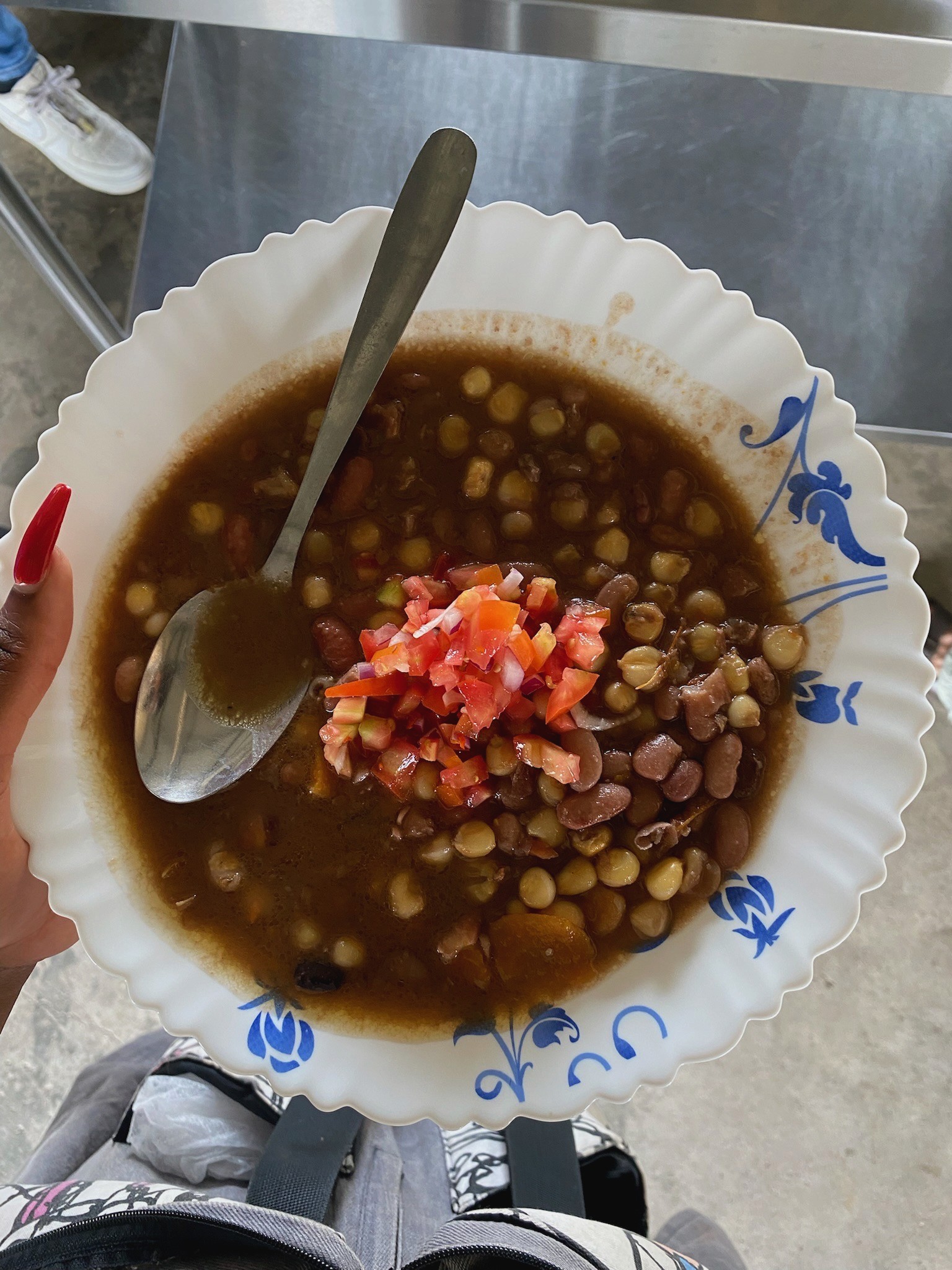
~ Githeri (soup with maize, beans, and veggies)
The founder, Francis, started in 2011 at a school where his late mother had been a primary school teacher. Many of the children were orphans or partial orphans raised by grandparents. Some weren’t eating three meals a day. Some came to school with nothing.
So he started with cups of maize porridge.
That was it. One cup.
What began as feeding 2,000 students at one school has now grown to 21 schools across six counties, feeding over 14,000 children across Kenya.
And the porridge isn’t just maize anymore. It now includes soy and other nutrients, it’s formulated to actually sustain a child. And on top of that they've begun a lunch program in addition to the porridge including beans, ugali, cabbage, veggies.
Already, that’s scale.
But that’s still not the part that shook me.
It’s Not a Handout
It costs about 40 Kenyan shillings ($0.31USD) to feed a child. Parents pay 15 shillings. The rest is subsidised via grants and donations.
That detail matters.
Because this isn’t positioned as charity. It’s structured as dignity. Parents are still participating. Still providing. Still contributing. Even if it’s partial.
And here’s something else that surprised me: In Kenya, donors don’t receive tax breaks for donating to non-profits. Which means anyone funding this is doing it purely to do good.
There’s no incentive model driving generosity.
Just intention.
That alone reframes a lot about how we think about aid and motivation.
Then I Saw the Tech
They use wristbands.
Each child taps a bracelet onto a digital system before receiving food. Parents pay through M-Pesa (which, by the way, runs this country). Funds are allocated per child. You can see balances. You can split payments across siblings. If a wristband is lost, it’s traceable.
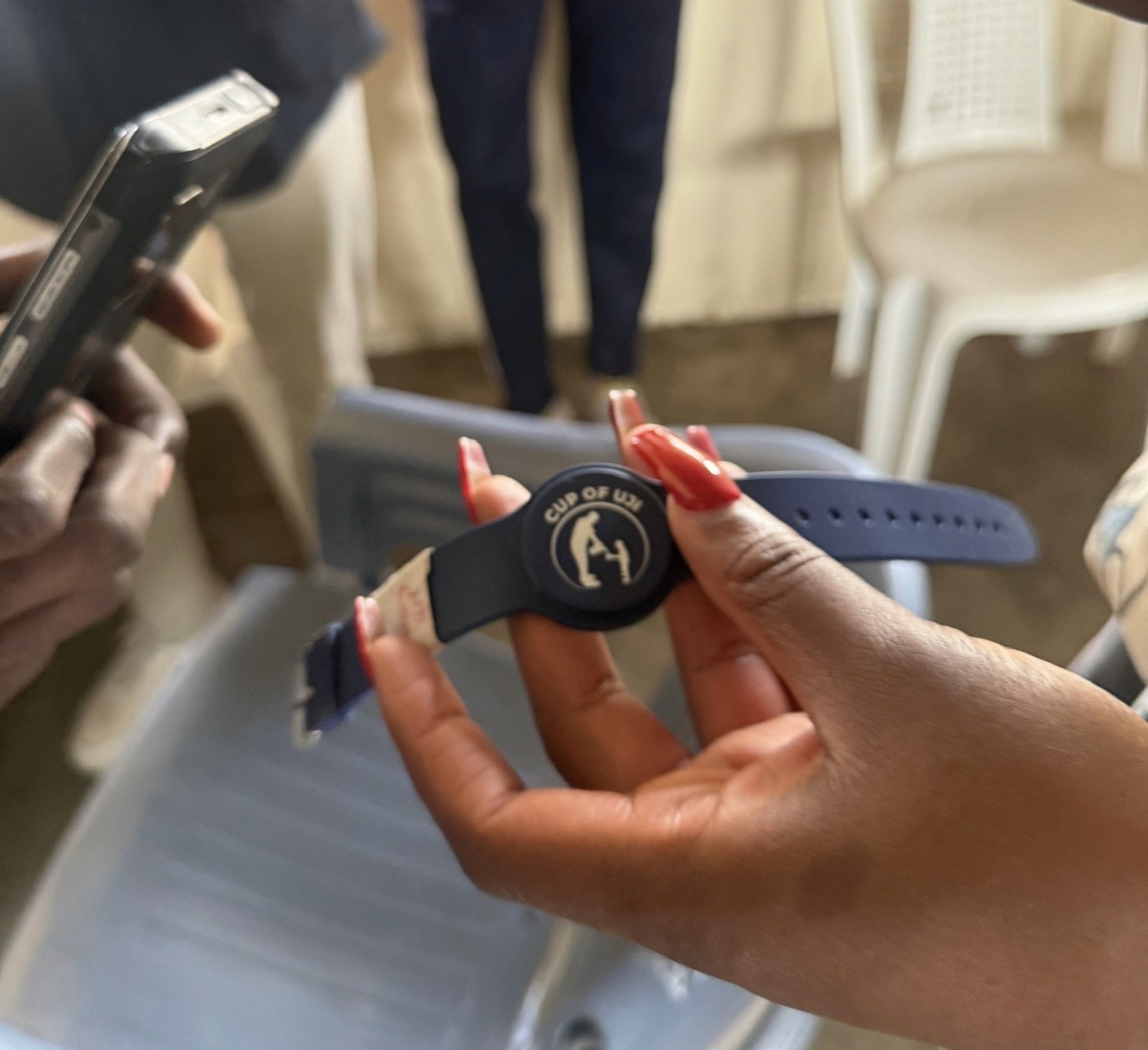
~ Wristband to track students’ account
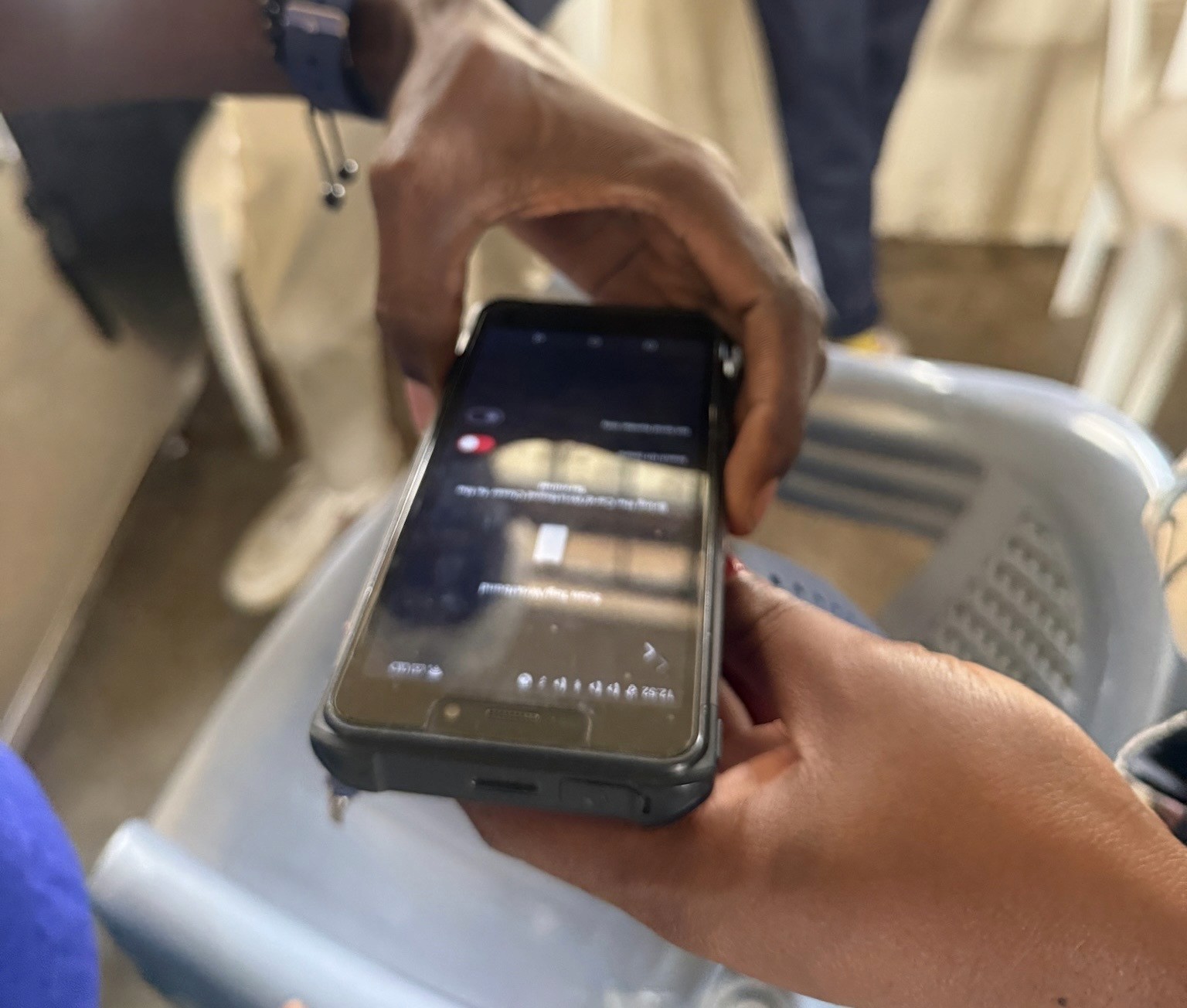
~ Digital payment system
This isn’t chaotic distribution, it's structured.
It’s accountable. It’s transparent.
It evolved from manual tracking to a digital portal. It's affordable, effective, and efficient. That's
innovation.
Then I Saw the Ecosystem
The school we visited today is inside a prison compound originally built for prison staff children.
As the surrounding community grew, the school expanded to include local families. The school has land, so Cup of Uji built a farm.

~ Fruit tree nursery
They now grow vegetables and fruit - partially to feed the children, partially to sell and subsidise
the programme.
They’ve built water tanks for collection, use solar, they grind their own maize, they cook using
pellets that are fume-free and reduce electricity usage.
This isn’t just a feeding scheme.
It’s systems thinking.
It’s environmental efficiency.
It’s circular logic.
And the wildest part?
They described it as “just the little we can do.”
African Sustainability Doesn’t Announce Itself
That’s what hit me.
So many people don’t recognise what they’re building as sustainability, because the term has now been branded.
We’ve professionalised it. We’ve made it a department.
When in reality: African sustainability isnt a strategy, it’s just what makes sense.
It’s just what works.
It’s just what allows the programme to survive without collapsing under its own weight. That’s sustainability.
Not because it was designed to tick ESG boxes.
But because if it didn’t evolve, it wouldn’t last.
The Narrative Gap
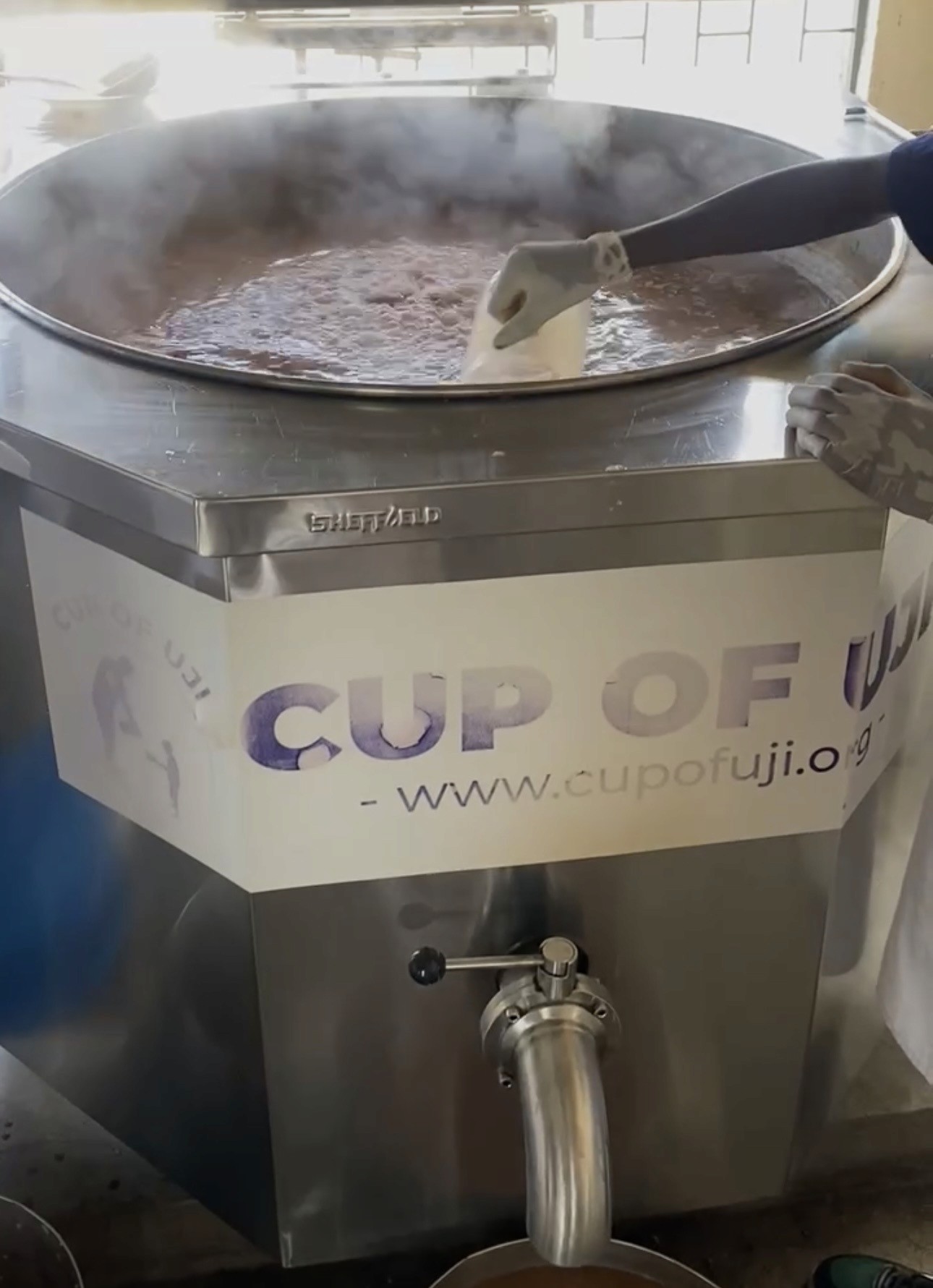
~ Pellet run boiler
We’re sending them the OneThread sustainability test.
And here’s the thing: we built it for fashion. But sustainability is sustainability. By definition it just is a measure of the ability for something to be maintained at a certain rate or level.
Our 10 pillars (Materials + Sourcing, Labour + Production Ethics, Environmental Impact, Community Engagement, Transparency + Accountability, Ubuntu Driven Economy + Shared Value, Circular Economy + Waste Management, Customer-Centered Sustainability, Innovation + Design Thinking, Cultural Sustainability + Narrative Sovereignty) translate across industries.
The problem isn’t that African organisations aren’t sustainable, the problem is they don’t always position themselves that way.
They don’t frame it as innovation. They don’t frame it as systems design. They don’t frame it as circular economy.
Because they’re not trying to be impressive. They’re trying to survive.
And sometimes that means missing out on the narrative leverage that could unlock more growth.
I went in thinking I would see charity.
I saw infrastructure.
I saw dignity.
I saw tech.
I saw farming.
I saw solar.
I saw payment systems.
I saw scale.
And I saw something very familiar: Africa is going to get it done.
Even without incentives, without applause, without the language to market it properly.
And I am so deeply grateful to be witnessing it.