Labour and Production Ethics
Nyaniso Tutu-Burris
This article is part of the OneThread Ten Pillars of Sustainability series, a framework developed to challenge narrow definitions of sustainability and explore what sustainability looks like when viewed through an African lens.
When people think about sustainable fashion, they usually think about the environment. They think about organic cotton, recycled polyester, carbon emissions, renewable energy, and biodegradable packaging. They imagine forests, oceans, and climate change. Rarely do they imagine the person sitting behind a sewing machine.

~ A woman sewing with a sewing machine
I think that says something about how we’ve learned to understand sustainability.
We’ve become incredibly good at measuring the impact fashion has on the planet. We’re much less comfortable measuring the impact it has on people. We calculate emissions down to decimal points, measure litres of water consumed, and track waste with increasing precision. Yet somehow, the people whose hands make the clothes often become invisible within the very conversation that claims to be about creating a better future.
For all the conversations we have about circularity, regenerative agriculture, and carbon footprints, fashion still relies on one resource more than any other: human beings. Which makes me wonder why labour is so often treated as an afterthought.
Because if sustainability is really about creating systems capable of lasting into the future, then surely the people holding those systems together should be the first thing we protect.
The Invisible Hands Behind Fashion
One of the greatest paradoxes in fashion is that the closer you get to luxury, the further away you get from the people who actually made the product.
We celebrate designers, founders, creative directors, and brands. We know their names, their stories, and their creative philosophies. But very rarely do we know the names of the machinists, the pattern makers, the cutters, the finishers, or the women sewing late into the evening so that a collection launches on time.
Fashion has mastered the art of making labour invisible.
Not because people don’t matter, but because invisibility has always made extraction easier. It’s easier to celebrate craftsmanship than craftspeople. It’s easier to sell a story than to improve the conditions of the people living it. And when the people making our clothes disappear from the conversation, it becomes much easier to ignore the systems that shape their lives.
That invisibility isn’t accidental.
It’s structural.
The Cost of Speed
Modern fashion has built its success on speed.
More collections.
Shorter lead times.
Lower prices.
Faster delivery.
Greater efficiency.
We’ve been taught to celebrate speed as innovation, but speed is never free. Every reduction in production time has to be absorbed somewhere. Deadlines don’t disappear. They simply move further down the supply chain until they reach the people least able to negotiate them.
If a customer receives a dress tomorrow instead of next week, someone probably worked through the night.
If prices continue falling while profits continue rising, somebody’s wages are absorbing that difference.
If production becomes infinitely flexible, workers are often expected to become infinitely flexible too.
We describe these as operational decisions, but they are ethical decisions. Behind every production deadline is a person trying to meet it. Behind every reduced lead time is someone whose body carries that pressure. The faster fashion moves, the more important it becomes to ask who is paying the true cost of that speed.
Compliance Is Not the Same as Care
One of the things I’ve noticed in sustainability is how often ethics becomes another checklist.
Did the factory pass its audit?
Does it have the required policies?
Does it meet minimum legal standards?
Compliance matters. Regulation matters. Governance matters. But compliance was never supposed to be the destination. It was supposed to be the minimum.
Somewhere along the way we’ve confused passing an audit with building dignity.
Those are not the same thing.
A factory can comply with labour laws and still create an environment where people feel invisible. A business can pay the legal minimum wage while expecting impossible production targets. A workplace can satisfy international standards while workers feel they have no voice in how work is organised.
We have become incredibly good at measuring whether factories comply with regulations. We can tell you whether there are fire exits, whether protective equipment is available, whether workers have signed contracts, and whether policies exist on paper. Those things matter, but somewhere along the way we stopped asking a much simpler question:
Can the people making our clothes actually build a life from the work they do?
There is a profound difference between a legal wage and a living wage.
A legal wage tells us what an employer is allowed to pay.
A living wage tells us what a human being actually needs to live with dignity.
Those are not the same question.
For example, the MIT Living Wage Calculator estimates that a single adult with no children in many parts of the United States needs well over twenty dollars an hour to meet basic living costs, yet many garment workers earn significantly less than that. Even in luxury fashion, where handbags can retail for thousands of dollars, factory wages often remain a tiny fraction of the value eventually created by the product. The issue isn’t simply whether someone was paid legally. The question is whether the system allows them to thrive.
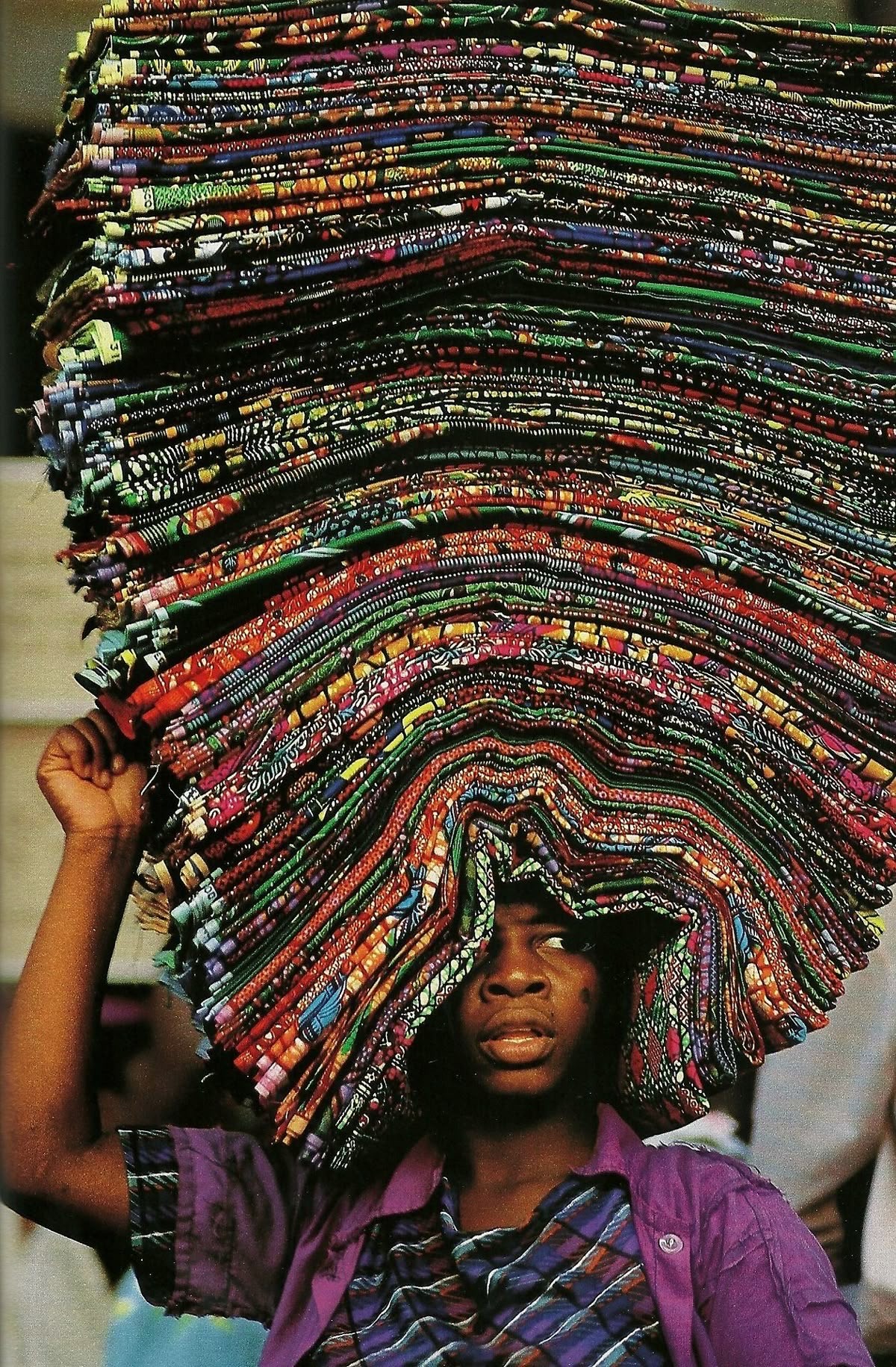
~ A person carrying fabric on their head
Compliance asks whether you’ve followed the rules.
Care asks whether you’ve created conditions in which people can flourish.
I don’t believe sustainability can stop at compliance.
The Complexity of African Fashion
One of the things that makes labour conversations different in African fashion is that our production systems don’t always fit neatly into the compliance frameworks developed elsewhere.
Much of African fashion operates through informal economies: independent tailors, family businesses, artisan collectives, cooperatives, home-based production, and small workshops. These businesses don’t always resemble the factories international audit systems were originally designed to assess.
That doesn’t automatically make them unethical.
Nor does it automatically make them ethical.
It simply means we need better questions.
The goal shouldn’t be forcing African fashion into systems designed for completely different economic realities. The goal should be building governance that reflects how production actually happens here while still protecting the dignity of the people doing the work.
Because dignity shouldn’t depend on whether your business fits neatly into a European compliance framework.
It should depend on whether workers are safe, fairly compensated, respected, heard, and able to participate in decisions that shape their livelihoods.
Worker Visibility Is Not Worker Agency
In recent years we’ve become much better at telling stories about makers.
Brands introduce us to artisans. We see beautiful portraits of women weaving baskets or hand-stitching garments. Campaigns celebrate heritage techniques and craftsmanship.

~ A shop owner sitting among her product
I think that’s important.
Visibility matters.
But visibility is not the same as agency.
Being photographed isn’t the same as being heard.
Being featured in a campaign isn’t the same as sharing ownership.
Being thanked isn’t the same as being paid fairly.
The question isn’t simply whether workers are visible.
The question is whether they have power.
Can they negotiate?
Can they influence decisions?
Can they refuse unsafe work?
Can they grow alongside the businesses they help build?
Because sustainability isn’t simply about acknowledging workers.
It’s about ensuring they have agency within the systems they sustain.
Dignity Is Infrastructure
At OneThread we often say that infrastructure isn’t just technology.
Infrastructure is governance.
It is documentation.
It is accountability.
It is the systems that make good decisions repeatable.
I think dignity works exactly the same way.
Dignity isn’t a feeling.
It’s infrastructure.
It’s living wages that allow people to plan for the future instead of simply surviving until the next payday. It’s workplaces where safety isn’t negotiable. It’s governance structures that include workers rather than simply managing them. It's a grievance system that people trust. It’s production timelines that recognise human limits rather than ignoring them.
Good intentions don’t protect workers.
Infrastructure does.
Just as environmental sustainability requires systems, human dignity requires systems too.
From Ethical Stories to Ethical Evidence
One of the biggest shifts happening across fashion is that brands are increasingly being asked to prove their labour claims.
It’s no longer enough to say your workers are treated fairly.
You have to demonstrate it.
Where are wages recorded?
How is worker feedback collected?
What health and safety systems exist?
How are grievances managed?
What governance structures are in place?
How are vulnerable workers protected?
These aren’t marketing questions anymore.
They’re operational questions.
At OneThread, we believe labour ethics should be documented with the same rigour as environmental impact. Our Labour & Production Ethics pillar doesn’t simply ask brands whether they care about workers. It asks them to demonstrate living wage commitments, workplace health and safety practices, governance structures, worker participation, training systems, grievance mechanisms, and the evidence that these systems are functioning in practice.
Because sustainability moves from intention to accountability the moment it is documented.
We’ve always said that Africa is sustainable by tradition.
The challenge has never been creating ethical businesses.
The challenge has been proving them.
The Future of Sustainable Production
Perhaps the biggest mistake we’ve made is believing sustainability starts with materials.
It doesn’t.
Before there is organic cotton, there is someone planting it. Before there is fabric, there is someone spinning it. Before there is a garment, there is someone cutting, sewing, pressing, repairing, checking, and finishing it.
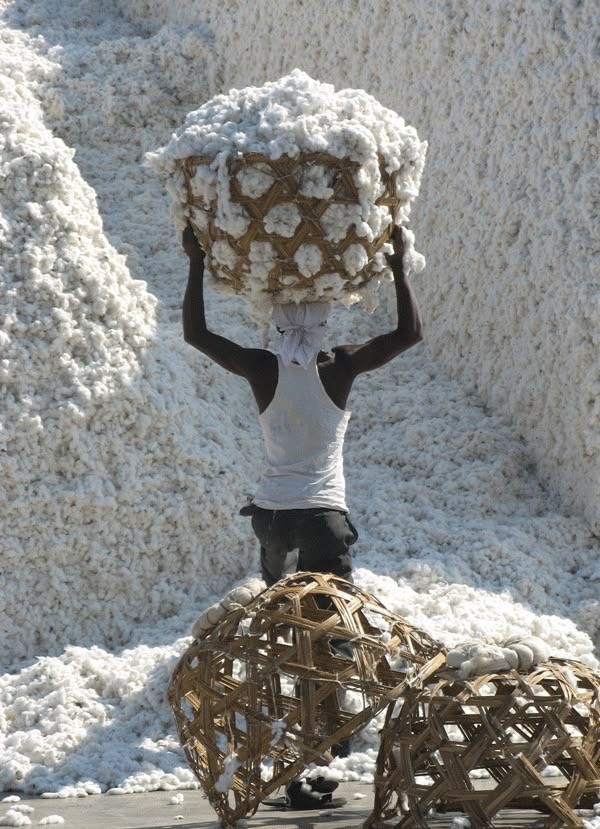
~ A person carrying raw cotton
Every product begins with a person.
If that person cannot build a dignified life through the work they create, then no amount of recycled fabric, carbon reporting, or environmental certification can make the system sustainable.
Because sustainability without dignity isn’t sustainability.
It’s branding.
The future of fashion will not belong to the brands with the loudest sustainability campaigns or the longest ESG reports. It will belong to the businesses that recognise the simplest truth of all: people are not one part of the supply chain.
They are the reason it exists.
For too long, sustainability has asked us to care about the products we make.
The next chapter of sustainability will ask us to care just as deeply about the people who make them.
Because the most sustainable fashion system is not the one with the lowest emissions or the most certifications.
It is the one in which every person, from the cotton farmer to the machinist, is able to live and work with dignity.
That isn’t an ideal.
It should be the standard.