An Open Letter on Credibility, Compliance, and Why We Built OneThread the Way We Did
Nyaniso Tutu-Burris
There is something I owe every brand that has taken the OneThread Sustainability Quotient: an explanation.
If you’ve taken our assessment, received your score, and felt disappointed, frustrated, or even discouraged, I understand. Part of that responsibility sits with me because, although I’ve often said in interviews and presentations that our assessment does not measure your commitment to sustainability, I don’t think I’ve explained that clearly enough within the assessment itself.
So let me begin there.
The OneThread Sustainability Quotient was never designed to measure whether your brand is “good” or “bad,” nor to judge your commitment to sustainability.
What it measures is something much narrower, but increasingly important: how much of your sustainability can currently be verified against emerging international requirements. Those are two very different questions. A brand can be deeply committed to sustainability while still lacking the documentation, systems and evidence that global markets increasingly expect.
That distinction matters because many African brands are already operating sustainably. They produce in small batches, preserve traditional craftsmanship, source locally, repair instead of replace, and build businesses around relationships, trust and community. The work exists. What often doesn’t is the documentation required to make that work visible to international systems. As sustainability becomes more data-driven and verification becomes more central to global trade, documentation is increasingly mistaken for sustainability itself. It isn’t. It is simply the language through which sustainability is recognised.
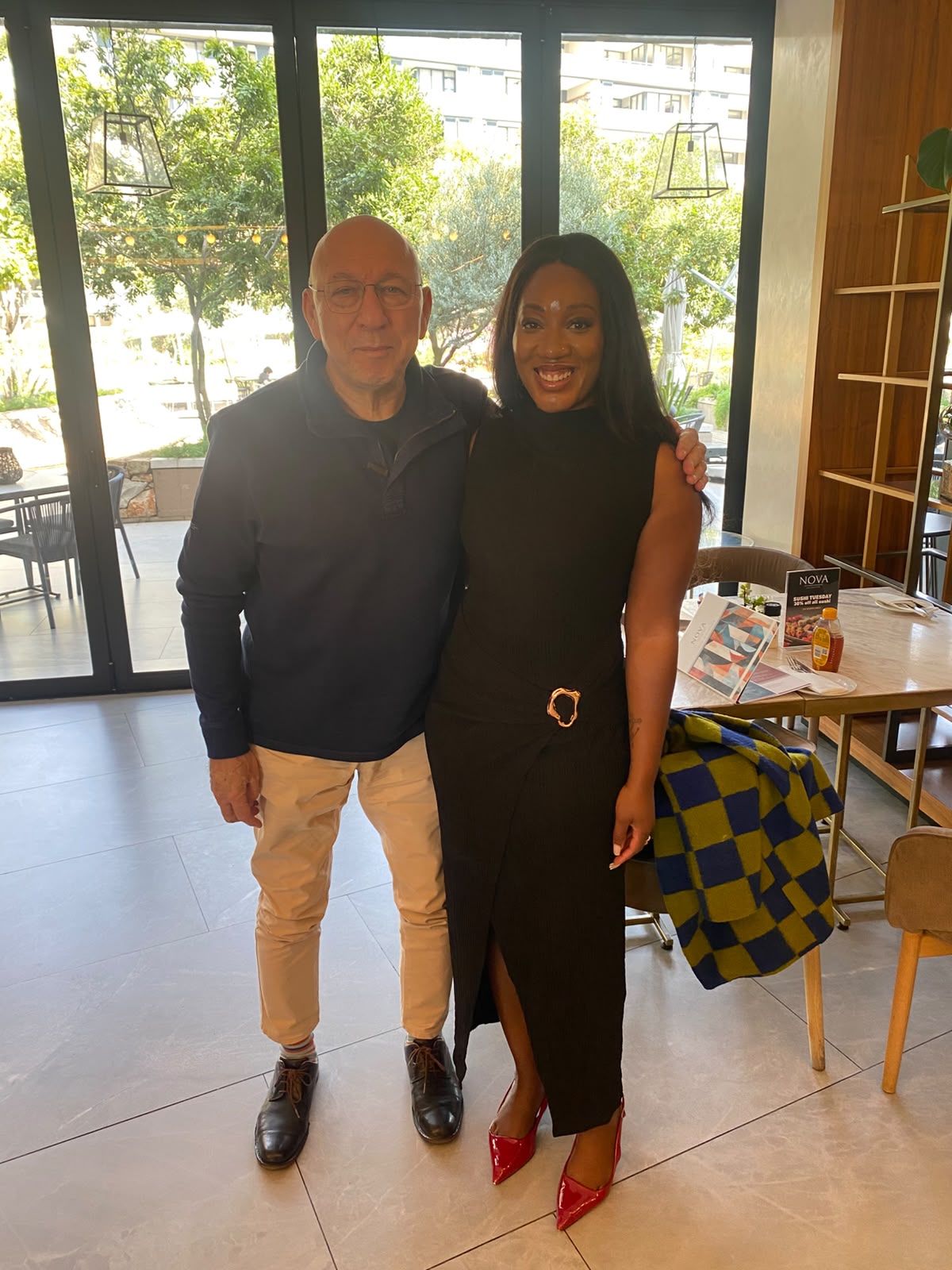
I was reminded of this during a conversation with Trevor Manuel
Before I had even raised the topic, he spoke about one of the greatest challenges governments faced during COVID-19. Across much of Africa, between 80 and 85 percent of people work in the informal economy. When governments tried to distribute financial relief, they encountered a problem that had nothing to do with whether people were contributing to society and everything to do with whether they could be recognised by the system distributing support.
The workers themselves were never invisible. They were farming, sewing, transporting goods, selling products, raising families and keeping entire economies alive. Their labour was visible to everyone around them. What was invisible was that labour to a system that had been designed around a different understanding of what work looked like. The problem was never the absence of work; it was the absence of documentation that fit someone else’s definition of legitimate work.
The more we spoke, the more I realised sustainability faces the same challenge. Many African brands are not struggling because they lack sustainable practices. They are struggling because they lack documentation that global systems recognise as proof. When we confuse documentation with sustainability itself, we stop measuring what businesses are actually doing and start measuring how well they have learned to speak the language of compliance.
That realisation shaped the way we built OneThread
People often ask why our assessment is so demanding, and the honest answer is that I wrote it that way intentionally. Not because I wanted brands to fail, but because I wanted them to be overprepared. During a recent conversation with our legal partners at LawyeredUp, we discussed how good legal practice rarely prepares for today’s requirements on its own. It anticipates tomorrow’s questions. The strongest policies are written for scrutiny that has not yet arrived.
I wanted our assessment to follow the same philosophy. If Europe asks for ten things tomorrow, I want African brands to have already documented fifteen. Not because I believe they should have to work harder than everyone else, but because I understand the reality of the markets we are entering. Credibility has never been distributed equally, particularly for African businesses.
Trevor also reminded me of something I think about often
We are building an African-centred company for African businesses, entering markets that have not always been taught to trust us. We see that reality far beyond fashion. Visa applications are denied because of the passport someone carries. Businesses struggle to open bank accounts because of the country they come from. Entire nations are categorised as higher risk before individual merit is ever considered. Those assumptions shape the environment in which African founders build companies.
I know that reality personally. I am a Black woman, I am under thirty, I am a founder, I am a single mother, and I am queer. I understand what it feels like to enter rooms where credibility is not assumed but must be earned. That does not make me resent the challenge, but it does influence how I build. It is why OneThread asks for operational logs, governance structures, legal documentation, evidence libraries and verification records. Not because African brands are less trustworthy, but because I refuse to leave room for someone else to question the legitimacy of work that I already know is being done.
Some people interpret this to mean that OneThread disagrees with global sustainability standards. We don’t. In fact, our position is almost the opposite. We don’t argue with global standards; we argue that the pathway to meeting them must reflect African realities. Digital Product Passports, traceability and verification are becoming part of the future of fashion, and pretending otherwise serves nobody. The challenge is ensuring that businesses which have operated sustainably for years are not excluded simply because they were never asked to document their work in this particular way.
This is also why OneThread goes beyond compliance
The Digital Product Passport is an important development, but it is a starting point rather than the destination. It asks where a product came from, how it moved through a supply chain and what materials were used. Those are important questions. We simply believe they are incomplete. Sustainability should also ask how workers are treated, how communities participate in value creation, how cultural heritage is protected, how decisions are governed and whether businesses strengthen the ecosystems they depend on. That is why OneThread measures ten interconnected pillars rather than one regulatory requirement.
Ultimately, my ambition has never been for African brands to simply pass Europe’s sustainability requirements. My ambition is for them to exceed them. Not because Africa has something to prove, but because I genuinely believe that if you removed the paperwork and judged sustainability by the work itself, many African brands could compete with anyone in the world. The values, relationships, ingenuity and environmental knowledge are already here. What has been missing is infrastructure capable of making those strengths visible.
That is what OneThread is building. Today, we are building bridges into existing global systems because African brands deserve full access to global markets. Tomorrow, I hope we help reshape the conversation about what sustainability itself should mean. We are not asking the world to lower the bar for African brands, nor are we suggesting that compliance should be optional. We are asking for something far more ambitious: that the systems defining sustainability become broad enough to recognise the realities they were never originally designed to see. If we can achieve that, African brands will no longer need to prove they belong in the future of sustainable fashion. They will help define it.